
Ḥanukah – The Festival of Light
ḤanukahThe rededication of the Temple festival (Festival of lights). (meaning ‘dedication’), is an eight-day festival which falls in the winter.
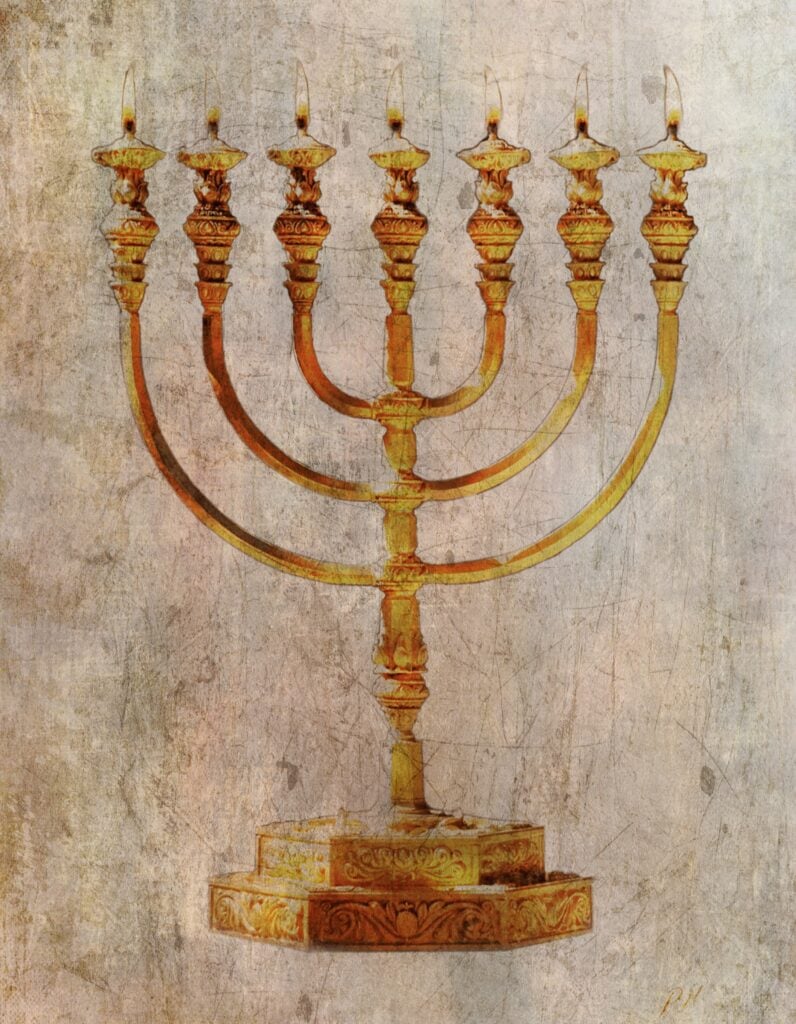
The festival remembers a story that took place around 2,200 years ago. In those days, most Jewish people lived in Israel and the Jewish life centred around the Jewish TempleA huge complex that stood in Jerusalem. It was the centre of Jewish religious life from about 1200 BCE – 70 CE. in Jerusalem. In the TempleA huge complex that stood in Jerusalem. It was the centre of Jewish religious life from about 1200 BCE – 70 CE. stood a golden menorahA seven branched candlestick that was lit everyday in the Temple. – a seven-branched candlestick that burned continually, representing God’s presence seven days a week.
King Antiochus and the Ancient (Seleucid) Greeks wanted to wipe out Judaism. They took over the TempleA huge complex that stood in Jerusalem. It was the centre of Jewish religious life from about 1200 BCE – 70 CE. and would not allow Torah to be learnt or mitzvotPlural of mitzvah (Jewish law and tradition) to be practised. Miraculously, after a three–year battle, the very small Jewish army, lead by a family called the Maccabees, managed to defeat the great army of King Antiochus. They took back control of the Temple, rededicated it to God and continued to live by the TorahThe Jewish holy book (bible)..
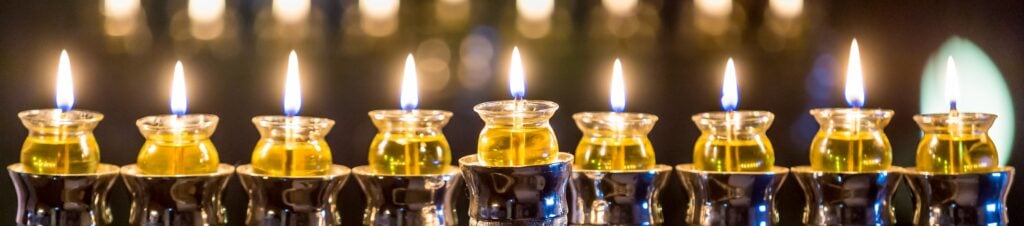
Tradition tells of a second miracle, where only a tiny amount of pure oil was found in the vandalised Temple. It was only enough oil to light the menorah for one day but the flames lasted for eight days, which was enough time to prepare more pure oil.
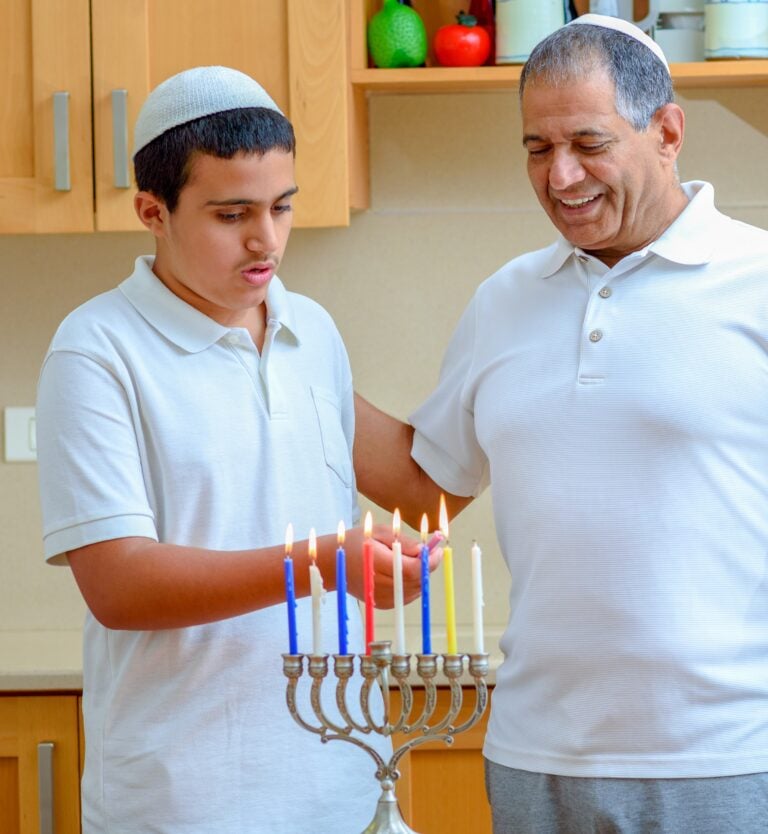
Jews across the world light a ḥanukiaA Hanukah candle holder with nine branches. (Ḥanukah lamp) for the eight nights of Ḥanukah… A ḥanukiaA Hanukah candle holder with nine branches. is similar to the original menorah but with nine lights – one for each day of the miracle, plus a ‘servant’ candle (shamash) used to light all the others.
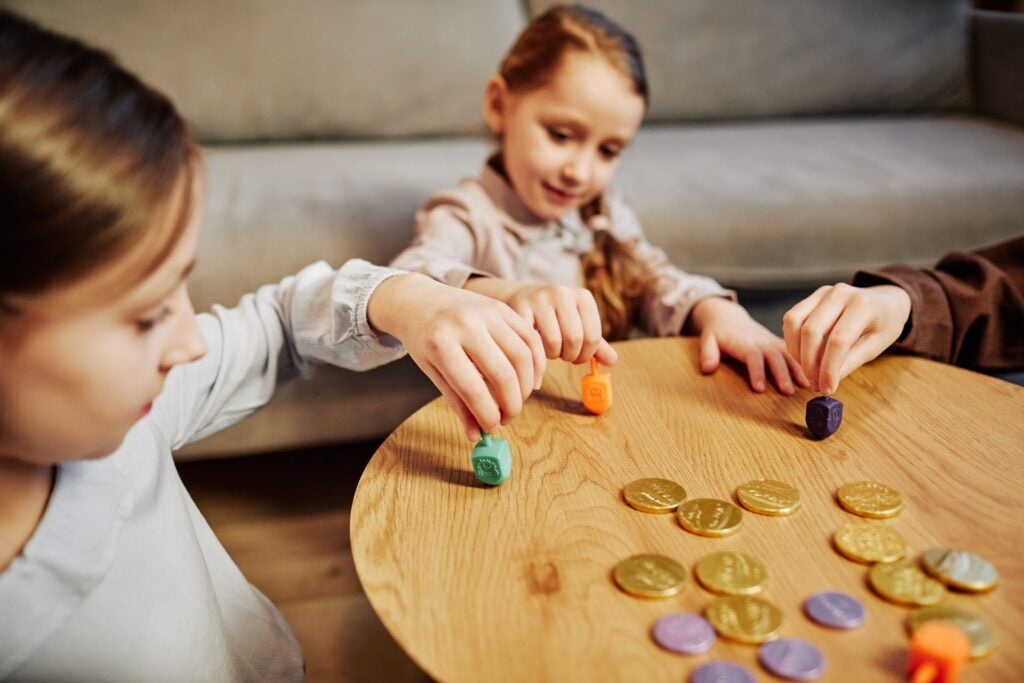
Other traditions include playing a game called ‘dreidelA spinning top used for a game on the festival of Hanukah.‘ (a spinning top with HebrewThe language of the Jewish people and of Israel. Hebrew is also used more generally to mean the culture of the Jewish people (ie. Hebrew calendar). letters on it) and giving Ḥanukah gelt – pocket money or chocolate coins and small gifts to children.
TO FIND OUT
1. Which foods are traditionally eaten on Ḥanukah and why?
2. The right to follow a religion or belief system is protected in the UK by law. Find out what these laws are called and how they protect peoples freedom to live as they wish.
CRITICAL THINKING
What would the world be like if Judaism had been wiped out by the Ancient Greeks many years ago? (Remember that Christianity and Islam are also Abrahamic religions, which began after the time of the Ḥanukah story.)
DID YOU KNOW?
1. It is a custom to put lit ḥanukias in a window where everyone in the street will see them. This is a public statement of what we believe in and to publicise the HanukahThe rededication of the Temple festival (Festival of lights). miracle to the outside world.
2. The original tradition was actually to light the ḥanukiaA Hanukah candle holder with nine branches. outside the house in the street, but this stopped due to fear of persecution in some countries and cold weather in others.
3. 71% of British Jews participate in at least one HanukahThe rededication of the Temple festival (Festival of lights). candle-lighting ceremony every year. A further 21% do so most or some years (JPR survey 2024).
CHECK YOUR KNOWLEDGE
1. What did the Ancient Greeks not allow Jewish people to do?
2. What useful thing was found when the Jews reclaimed their TempleA huge complex that stood in Jerusalem. It was the centre of Jewish religious life from about 1200 BCE – 70 CE.?
3. What do Jews do on Ḥanukah to remember this story?

