
Pesaḥ (Passover)
Pesaḥ (or Passover) is a week-long festival in the spring time. It remembers the Israelites being slaves for the Pharoah in Egypt for over 200 years. It is a celebration of freedom.
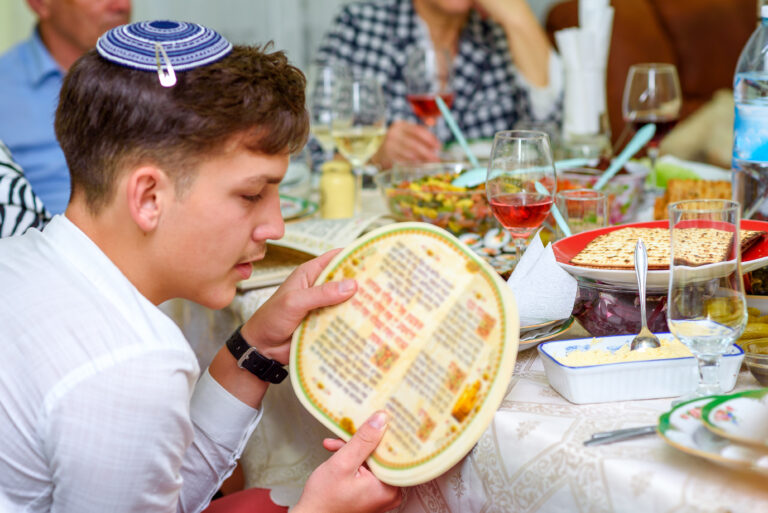
The festival begins with the seder – a long but interactive evening including discussion, prayer, singing, storytelling and of course a meal. This is all done in a certain order (seder is HebrewThe language of the Jewish people and of Israel. Hebrew is also used more generally to mean the culture of the Jewish people (ie. Hebrew calendar). for ‘order’) where a book called a haggadah is followed. This helps to make sure that the story of slavery and the Exodus from Egypt is passed down from generation to generation and remembered forever.
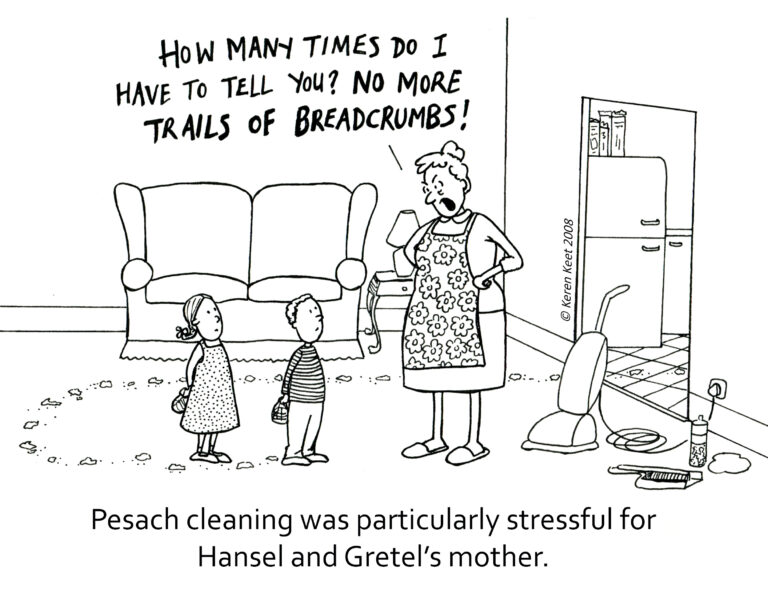
The Israelites left Egypt in a hurry, so their bread did not have time to rise. We remember this by eating matzah (a flat cracker bread) throughout the festival instead of normal bread. Most Jews also avoid eating any other ḥametzLeavened (risen) foods that are not eaten on Passover. – foods which have risen, like cake. Many have a huge spring clean to make sure there are no ḥametzLeavened (risen) foods that are not eaten on Passover. crumbs anywhere in the house.
ḤametzLeavened (risen) foods that are not eaten on Passover. also symbolizes a puffed-up ego (when people think they are wonderful and very important). Getting rid of this ‘puffiness’ reminds us to be humble and appreciate the simple things in life – as we were once slaves who had no wealth or freedom.
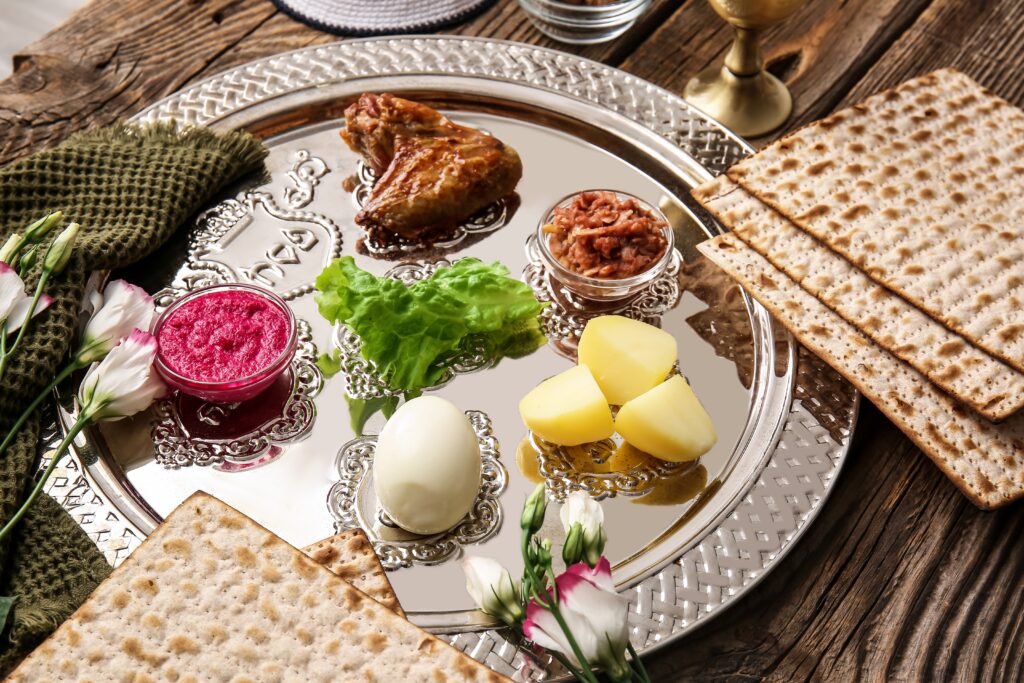
The seder plate is filled with many symbolic foods which are eaten as part of the seder. Each one is a reminder of a different part of the story of slavery and the Exodus from Egypt.
(Exactly what is on the seder plate varies slightly across the world and family traditions!)
AUDIO : “My family have a beautiful, big seder plate that my parents received as a gift from a family friend. It’s silver with Hebrew lettering around the edges and six little bowls that sit on top to hold the different symbolic foods.
There is a brown, sticky paste called ḥaroset that is meant to look like the cement the Israelites used when they were building cities for Pharoah when they were slaves. It looks disgusting but tastes amazing. My family’s recipe is a mixture of ground almonds, date spread and wine.
There is salt water to represent the tears and the sweat of the slaves, a bone to represent the lamb offering the Israelites gave on the last night in Egypt. There is also karpas – a vegetable to represent new life, an egg symbolising the continuing cycle of life and maror – bitter herbs to remember what a bitter, awful time the slaves had. My family uses romaine lettuce, but others use horseradish. When you eat enough of the lettuce it becomes bitter, as the centre of it is the bitter part.
Seder night is one of my favourite nights of the year as it symbolises the older generations passing down the traditions and knowledge of Judaism to the younger generation. So it is a time in the year where we can all enjoy and celebrate together.”
TO FIND OUT
- Has any evidence been found by historians in Egypt that these events did happen to the IsraelitesThe descendants of Jacob (who was known as Israel). The name ‘Jewish people’ is used for the Israelites after they received the Torah.?
- What is Mimouna?
CRITICAL THINKING
1. What can be learnt from retelling the story of a people who were enslaved 3,000 years ago?
2. Is enough being done by British people (and industries) to stop slavery and child labour that still exists around the world today? Is there anything that you could do to help?
DID YOU KNOW?
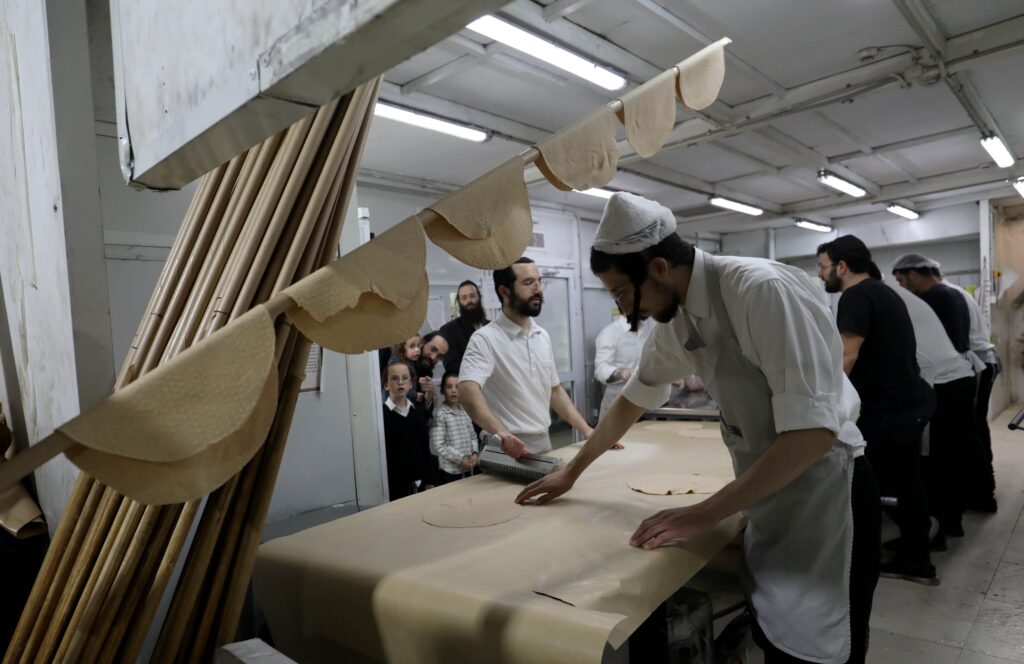
1. To be kosher‘Suitable’ or ‘fit’ according to Jewish law, often used to describe permitted foods. for PassoverThe festival of Passover., the process of making matzahFlat (unleavened) bread eaten on Passover, made of just flour and water. has be completed from start (adding the water to the flour) to finish (taking it out of the oven) in less than 18 minutes! This ensures it does not have time to rise…
2. The mitzvah in the Torah to look after strangers and converts to Judaism links to the Passover story: “You shall not oppress a stranger, for you know the feelings of the stranger, having yourselves been strangers in the land of Egypt.” (Exodus 23)
3. 71% of British Jews attend a seder every year. A further 22% attending one most or some years (JPR survey 2024).
CHECK YOUR KNOWLEDGE
1. What does Passover commemorate (remember) and celebrate?
2. Which Passover foods and traditions help Jews to remember what happened over 2000 years ago?
3. What is traditionally not eaten on Pesaḥ?

