
Death & Mourning
When someone Jewish dies they are buried as soon as possible, sometimes the same day. This is due to the belief that their soul has left the body and so the body should be respected by being returned to nature. A minority of ReformAn ideology within Judaism (see ‘Groups within Judaism page for more details). and LiberalAn ideology within Judaism (see ‘Groups within Judaism page for more details). Jews choose cremation rather than burial.
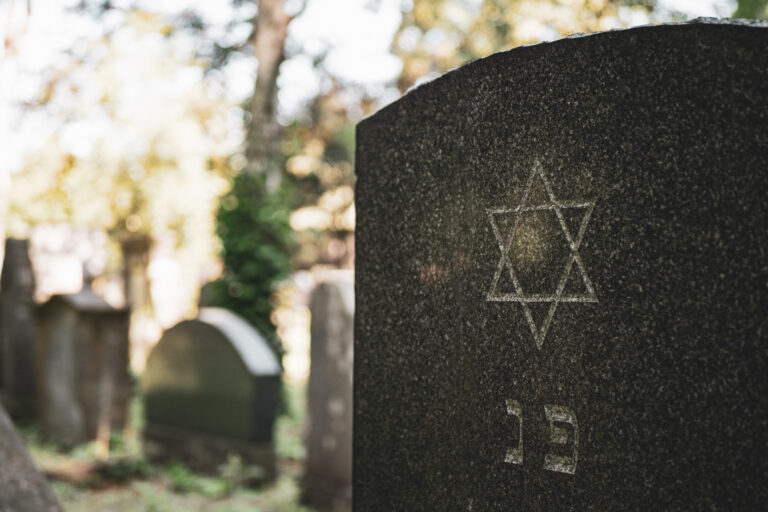
There are many rituals for the immediate family of the person who has passed away, such as tearing an item of their clothing – a public symbol that they are mourners. There is also a week of mourning called shiva (which means ‘seven’).
During this week of mourning, prayer services are held at their house so that they can say the mourner’s kaddish prayer. Extended family, friends and community come to visit them, talk about the departed, remembering happy times and all the good things they did. Visitors will also bring food so that the mourners do not have to cook.
Other traditions include covering mirrors (to focus on feelings, not appearances), not listening to music, sitting on very low chairs close to the ground and eating round foods such as bagels and eggs to symbolise the ongoing circle of life.
This is the first part of a month-long period called shloshimA period of 30 days of mourning after a close relative has died. (meaning ‘thirty’), but even for the whole year after a death, close family members are known as mourners. Some mourners do not buy new clothes, go to the theatre or concerts, or attend parties for the whole year. Many also say the kaddish every day, believing that it helps the person’s soul settle into ‘the world to come’…
At some point during this year, the gravestone is put in place, and a prayer service is held there. Traditions for the timing of this vary from straight after ‘shloshim’ to the end of the year of mourning. This is known as a ‘stone setting’, ‘unveiling’ or matzevahThe ceremony where a gravestone is put in place. in HebrewThe language of the Jewish people and of Israel. Hebrew is also used more generally to mean the culture of the Jewish people (ie. Hebrew calendar)..
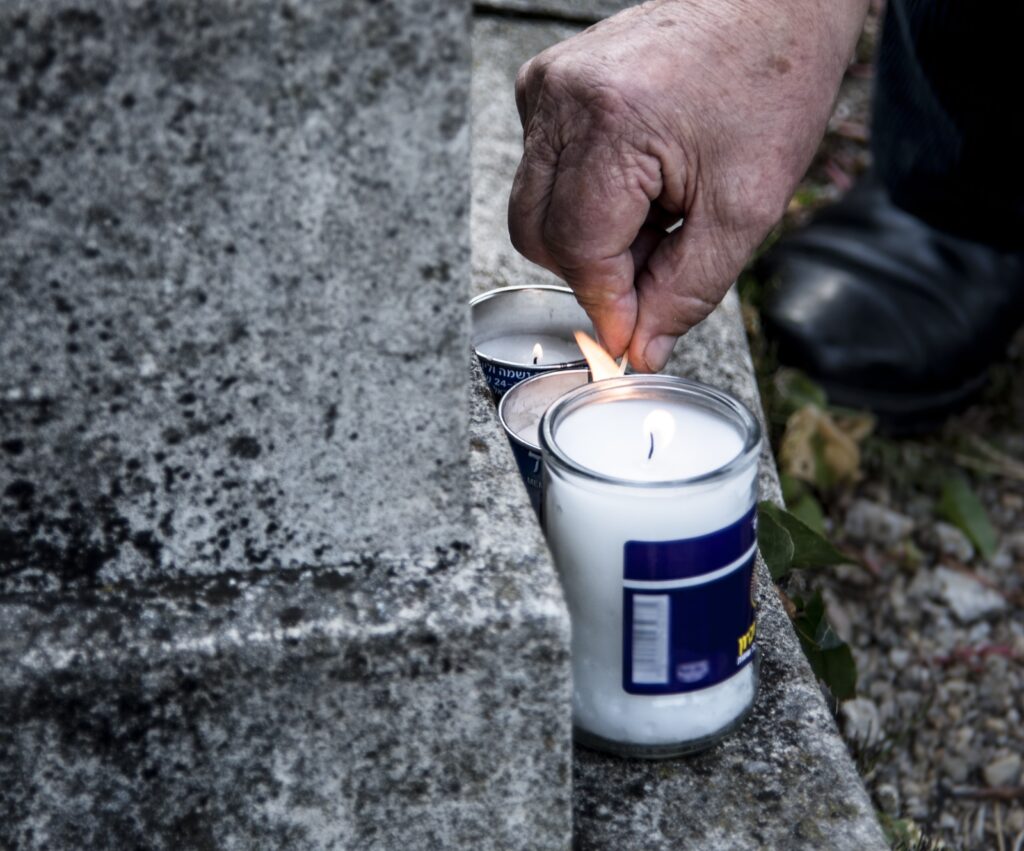
Memorial candles are lit by close family members each year on the YahrzeitThe anniversary of a death or sad event. (anniversary) of the person’s death to remember them. Traditionally candles and stones are left on graves (not flowers). Candles are generally used in Judaism for memory as there is much symbolism behind flames and fire.
TO FIND OUT
What are some of the things that fire symbolises in Jewish culture?
CRITICAL THINKING
1. Jewish tradition uses candles for memory (for example for remembering those who have died, on festivals and the ner tamid in synagogues) and flowers to celebrate. Western culture tends to do the opposite – use candles to celebrate (e.g., on birthday cakes) and flowers to remember (e.g., on graves). Why do you think different traditions use these symbols in opposite ways?
2. Think of two advantages and two disadvantages of having a specific date each year to remember and honour relatives who have passed away.
DID YOU KNOW?
1. Islam also holds the same belief that a person should be buried as soon as possible after death, preferably the same day.
2. Many Jewish people believe that the soul goes to ‘heaven’ where it can be at total peace. For souls that may not have lived their life as best as they could, the traditional belief is that there is a waiting time until the soul is pure enough and ready for heaven, called ‘gehenom’. Some think that saying the mourner’s kaddishA prayer said by mourners and in synagogue services to separate one section of prayer from another. prayer helps their relative’s soul reach heaven more easily.
CHECK YOUR KNOWLEDGE
1. When do Jewish burials traditionally happen?
2. What is a shivaMeaning seven. The seven day mourning period after the death of a close relative.?
3. What does the word yahrzeit mean?

