
The Shema, Mezuzah & Tefillin
The ShemaA section from the Torah, used as a prayer. Found in mezuzah scrolls and tefillin. prayer is three paragraphs taken directly from the Torah. It is said twice daily, morning and night, by many Jews. It is a very important text as it starts with the key traditional belief in one God:
Hear o Israel, the Lord is God and the Lord is one.
שְׁמַע יִשְׂרָאֵל יְי אֱלֹהֵינוּ יְי אֶחָֽד
It then goes on to the mitzvahJewish law or commandment. It can also be used to mean a good deed. of loving God which many rabbis have seen as one of the most important mitzvahs (along with loving your neighbour).
As well as in the Torah scroll, there are two other places you can also find this small section of Torah text, handwritten on parchment. This is because the Shema, it instructs that the text should be put in two other places
The first place is on the doorposts of Jewish people’s homes and communal buildings. This mini scroll with the Shema handwritten on it is called a mezuzah. These are kept in small boxes (mezuzah cases) to protect them.
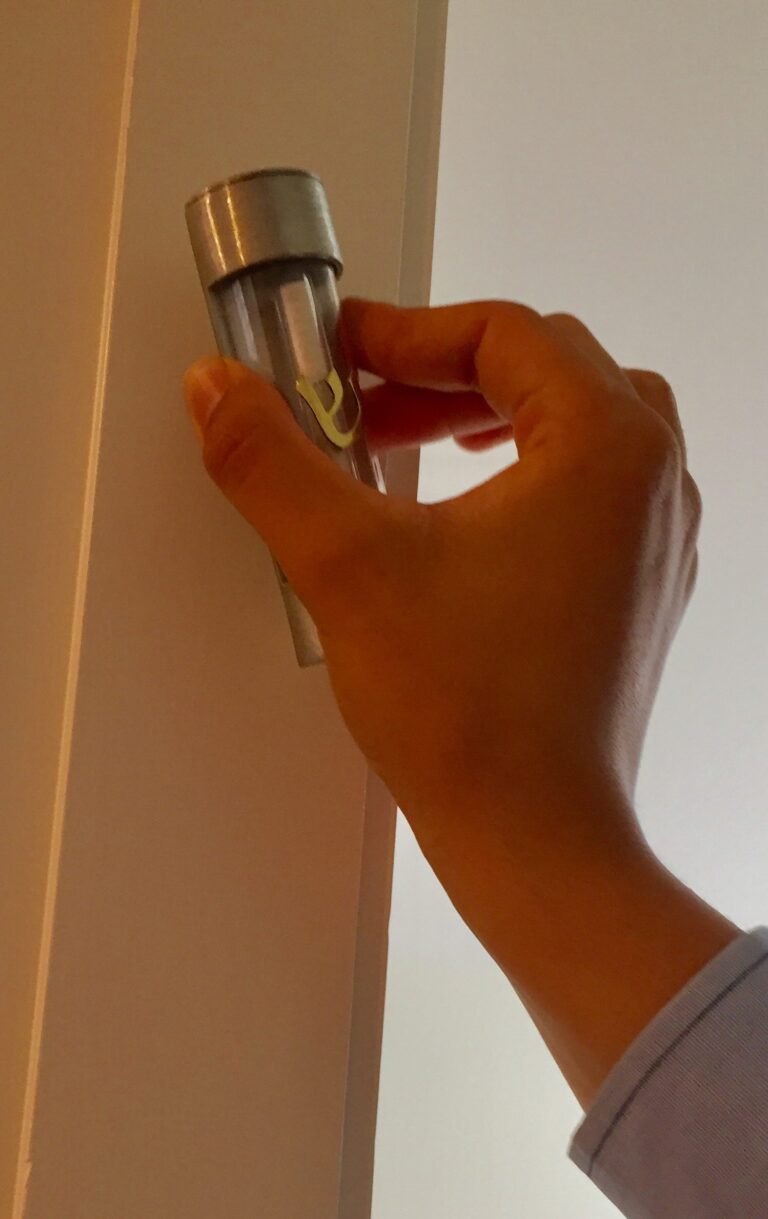
You shall write them upon the doorposts of your house, and upon your gates. (Deuteronomy 6)
וּכְתַבְתָּ֛ם עַל־מְזֻז֥וֹת בֵּיתֶ֖ךָ וּבִשְׁעָרֶֽיךָ
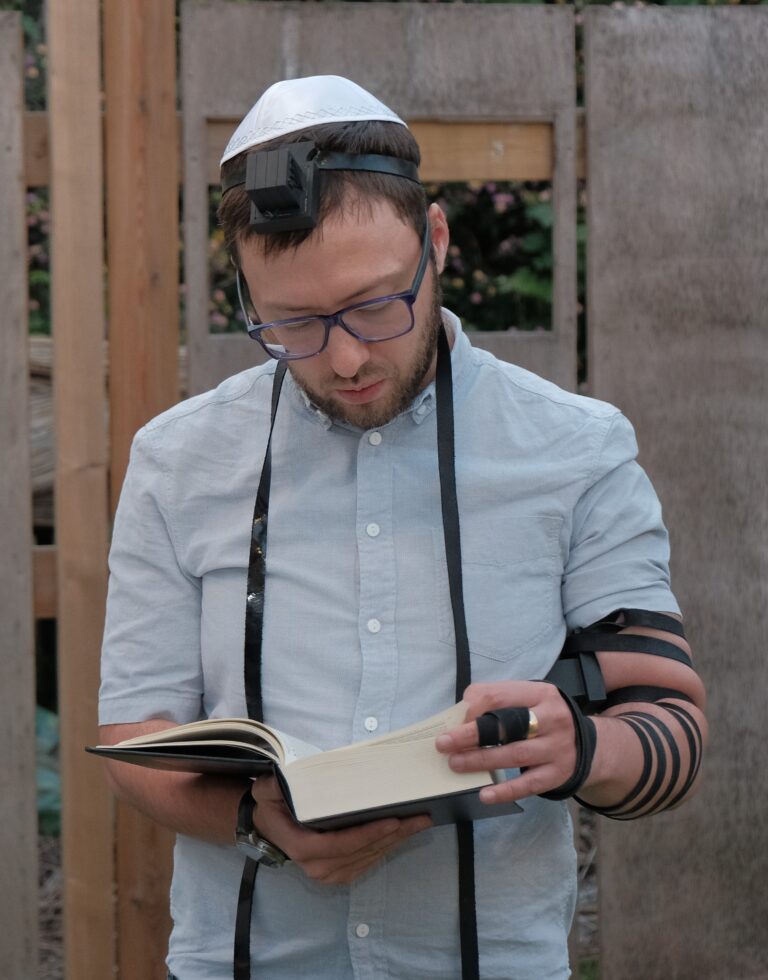
You shall bind them on your hand and… between your eyes…(Deuteronomy 6)
Tefillin are put on the head, representing thoughts and decision-making and on the arm, representing action. The arm tefillin is positioned facing towards the heart, showing that emotion is also involved in living a religious life.
To show how special Torah text is (including mezuzahs and tefillin text), when they are too old or damaged to be used they are buried as a sign of respect, rather than just being thrown away.
TO FIND OUT
The HebrewThe language of the Jewish people and of Israel. Hebrew is also used more generally to mean the culture of the Jewish people (ie. Hebrew calendar). letter ש (shin) on mezuzahA small scroll containing a part of the Torah, attached to a doorpost. cases is the first letter of the word Shaddai – a word used to describe God. What does ‘Shaddai’ mean?
CRITICAL THINKING
1. According to the TorahThe Jewish holy book (bible)., before the IsraelitesThe descendants of Jacob (who was known as Israel). The name ‘Jewish people’ is used for the Israelites after they received the Torah. left Egypt, having been slaves for over 200 years, they made signs on their doorposts to show that theirs were Jewish houses, for protection during the tenth plague. Do you think putting a mezuzah on the doorpost links to that story?
2. What message or motto would be so important to you that it would be worth putting it up in several places in your home to remember everyday?
DID YOU KNOW?
1. Ashkenazi Jews position the mezuzah diagonally on a doorpost but most Sephardi and Mizrahi Jews position it vertically.
2. Some Jews wrap the tefillinTwo small boxes containing Torah text. Worn for morning prayer on the head and arm. strap in a way that the three lines make the shape of the letter ‘shin’ on their hand (like the shin on a mezuzah case).
CHECK YOUR KNOWLEDGE
1. Where is the text for the ‘Shema’ prayer originally from?
2. What is a mezuzah and where would you find one?
3. What parts of the body are tefillin put on?

