
Sukkot – The Festival of Huts
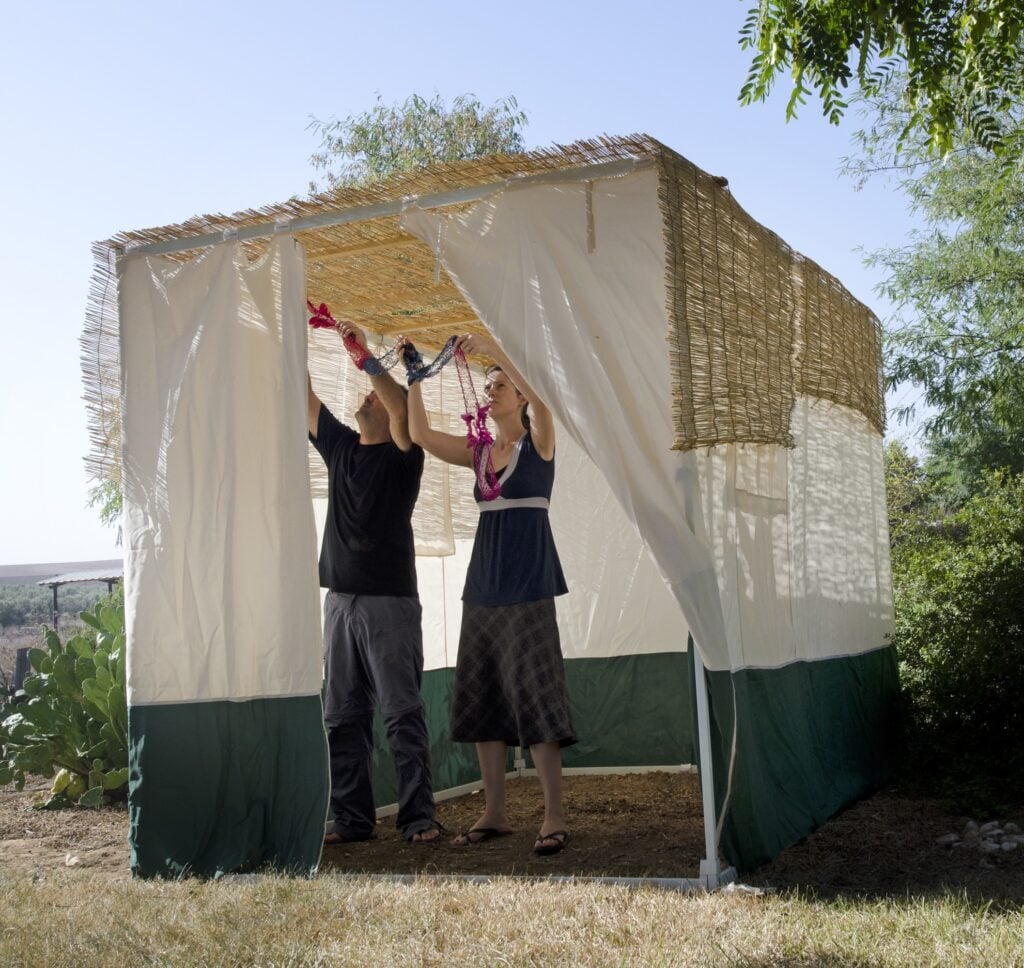
Sukkot means huts. This week-long festival remembers the temporary shelters the IsraelitesThe descendants of Jacob (who was known as Israel). The name ‘Jewish people’ is used for the Israelites after they received the Torah. built and lived in during their 40-year trek across the desert to Israel after leaving Egypt. Many families build a sukkah (singular of sukkot) in their garden, in which they eat, host guests, and spend time in over the festival. Some people even sleep in their sukkah! A sukkah must not have a permanent roof and it is essential to be able to see through the roof to the sky.
Sukkot falls at the start of autumn, when harvesting crops is done, so is also a harvest festival. When there was a Jewish Temple, Jews would travel there on Sukkot, taking some of their first fruits of the autumn harvest to show gratitude to God. People who build a sukkah decorate them with fruit, vegetables and flowers to remember this.
Jewish culture and the calendar in ancient times, (just as with many ancient cultures), was very much structured around the agricultural year. This is because people were hugely affected by lack of rain. A bad crop would mean a very difficult year. The end of Sukkot is the beginning of autumn – the start of the rainy season in Israel, therefore the time when Jews traditionally pray for rain:
"Turn to us, God… do not hold back water. You are our Lord God, who causes the wind to blow and the rain to fall. For blessing and not for curse. For life and not for death. For plenty and not for lack."
(Excerpt from the prayer for rain)
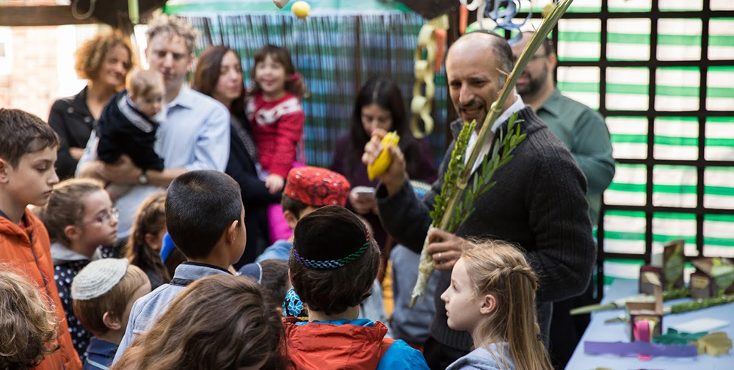
Traditionally on Sukkot, four species of plants – a palm branch, willow leaves, myrtle leaves and citron fruit – are collected or bought. They are known as the lulav and etrog in Hebrew. They are blessed and then waved in six directions, representing God being everywhere.
TO FIND OUT
1. Which four body parts are the ‘four species‘ said to represent? Why would these body parts be considered important in connection to living a religious life?
2. SukkotThe autumn festival of booths/huts. was 1 of the 3 ‘foot festivals’ where Jews travelled to the TempleA huge complex that stood in Jerusalem. It was the centre of Jewish religious life from about 1200 BCE – 70 CE. in Jerusalem to bring their produce. On which other 2 festivals did this used to happen?
CRITICAL THINKING
1. How do you think you would feel sleeping overnight in a flimsy hut with no solid walls or roof? How could those feelings be connected to faith in God?
2. Is there a need for or benefit to an atheistSomeone who does not believe in a god or supernatural power. (someone who does not believe in God) showing gratitude for having enough food to eat? If yes, what might be a good way for them to show their gratitude?
3. We in the UK are able to buy produce from all around the world, at any time of year in our local supermarket! Is this a good thing? Are there any disadvantages of such easy and vast availability of food?
DID YOU KNOW?
A tradition of Sukkot is to be hospitable and invite guests into your sukkahA temporary booth / hut built for the festival of Sukkot.. This even goes so far as to symbolically invite biblical characters into the sukkahA temporary booth / hut built for the festival of Sukkot. – a different one each night of Sukkot! This tradition is known as ‘ushpizin‘ meaning ‘guests‘ in Aramaic (an ancient language lots of Jews used to use).
CHECK YOUR KNOWLEDGE
1. What does the word Sukkot mean?
2. What is the link between the festival of Sukkot and the Jewish Temple?
3. How many species of plant are gathered together for a special blessing on Sukkot?

