
Rosh HaShana & Yom Kippur

The cycle of festivals instructed in the TorahThe Jewish holy book (bible). starts in the Autumn with Rosh HaShana, the Jewish New Year – basically the world’s birthday! (Rosh = head (of), Ha = the, Shana = year)
It is also a time for self reflection – a time for people to think about the past year and think about the year to come.
The main traditional foods include sweet things, such as apple dipped in honey and honey cake, to wish for a good, sweet year to come. Also, pomegranate, which is bursting with seeds, just as we wish our coming year to be bursting with good deeds and ‘mazal‘ (good fortune).
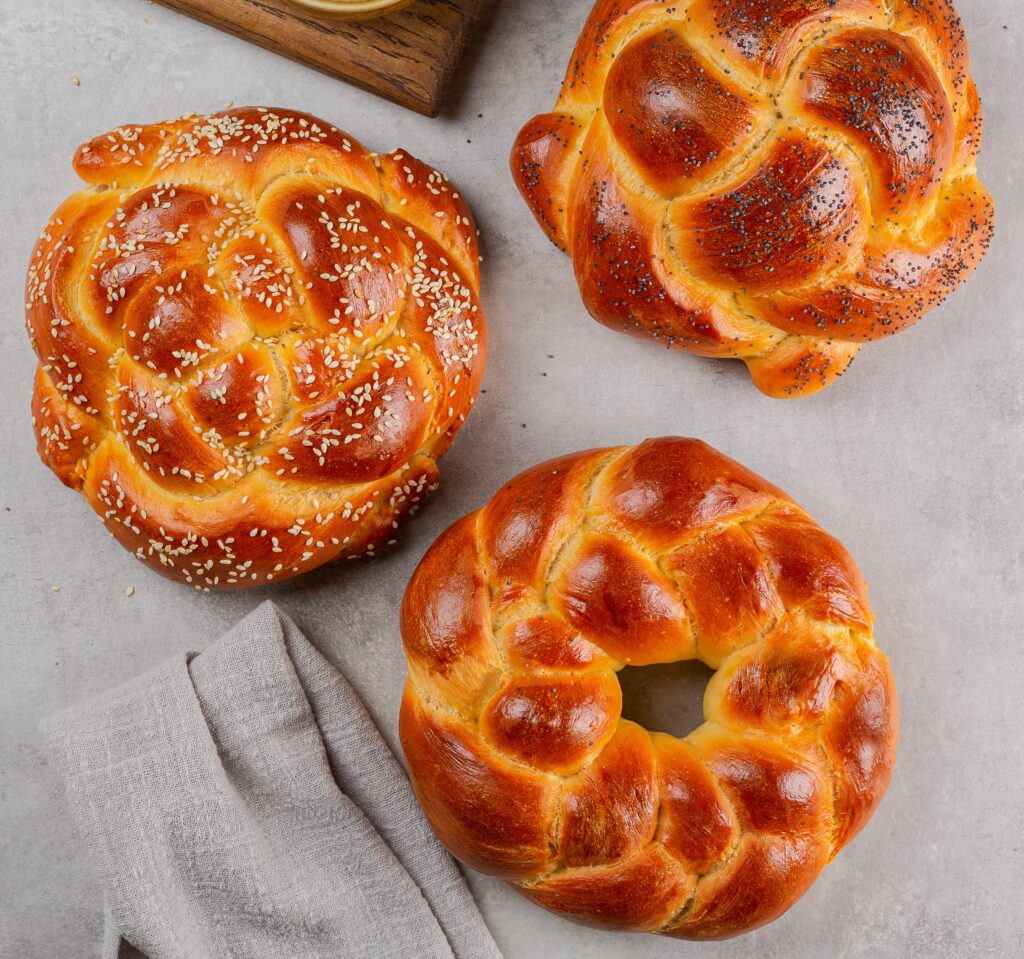
Round ḥallahCommonly written as challah, is traditional sweet bread eaten on shabbat in many Jewish households. (traditional bread for special occasions), instead of the regular plaited style hallah, is eaten. This is to symbolise the world (and another year passing since the creation of the world) and the ongoing cycle of the seasons and years. This is also eaten with honey!
It is a day for sounding trumpets… (Numbers 29)
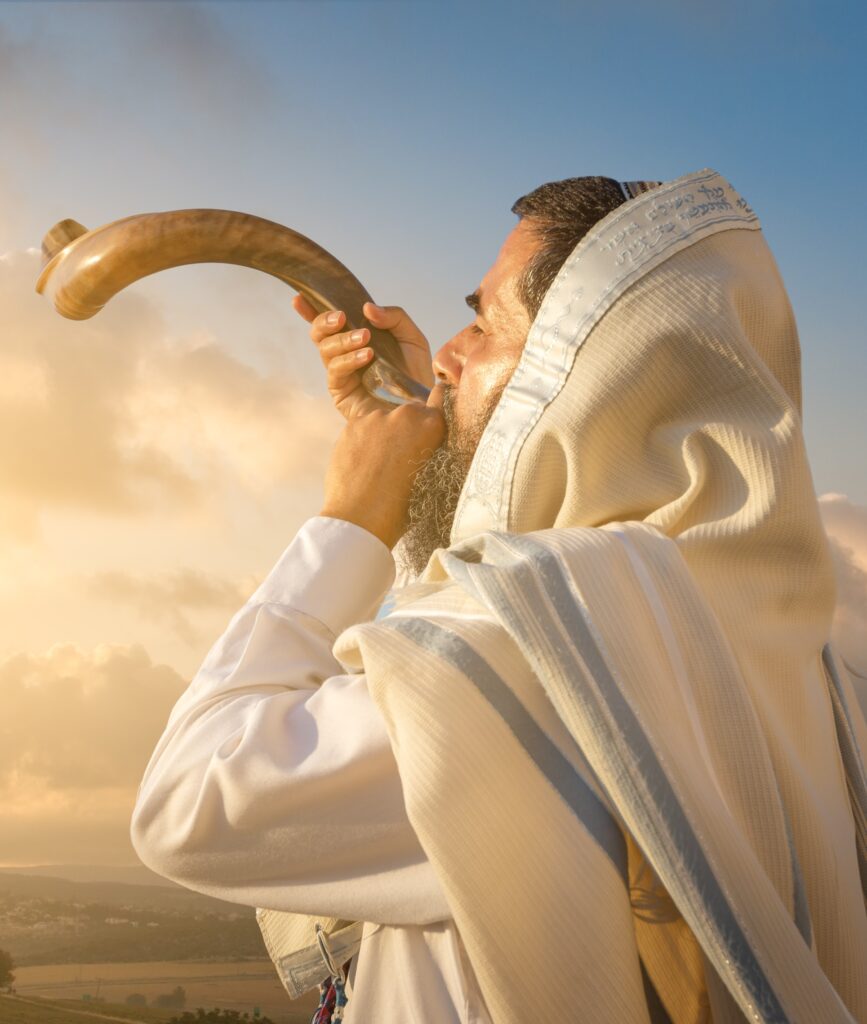
The ram’s horn, or shofar in HebrewThe language of the Jewish people and of Israel. Hebrew is also used more generally to mean the culture of the Jewish people (ie. Hebrew calendar)., is blown on Rosh HaShana in different ways, making 4 types of sounds. This is to publicly announce the start of the new year. It is also a spiritual call to the soul to wake up and assess how life is going and what changes need to be made to improve it.
This is followed ten days later by Yom Kippur – the ‘Day of Atonement’ in English. It is a serious day of self reflection, reviewing our behaviour over the past year and trying to start the new year positively. It is an opportunity to apologise to both people and God. The story of Jonah is read in synagogues as it is about forgiveness and turning over a new leaf…
The period between Rosh HaShana and Yom Kippur is known as the ‘Ten days of repentance‘.
Religious Jews (and some cultural Jews) fast (do not eat or drink) the whole day. Many Jews spend all day in synagogueJewish communal building where people gather to pray, learn and celebrate. (From Greek – meaning place of gathering). praying. It is traditional to wear white clothes as a sign of purity or starting a ‘clean slate’. Even Torah scrolls are given white covers for this special time of year.
Other Yom Kippur traditions include not washing or wearing luxurious clothing such as leather or expensive jewellery. This is to show that it is not what is on the outside, but your behaviour and good deeds that count. Many Jews give extra money to charity at this time of year to remind themselves to lead life as a good person.
TO FIND OUT
1. Why is a ram’s horn used for a shofar? Where in the Torah is a ram mentioned?
2. As well as eating traditional Rosh HaShanaThe Jewish new year. (Literally translates as ‘Head of the year’.) foods mentioned above, some Jews eat (or at least have on the table) lots of other foods as ‘simanim’ (symbols) of wishes for the year ahead. Find some examples of these.
CRITICAL THINKING
1. What are the advantages and disadvantages of having one set day every year to focus on your behaviour and things you may have done wrong?
2. This time of year is often called the ‘High Holy Days‘. What does the word ‘holy’ mean to you? Are some days more holy than others? Does people’s behaviour make a day or a place more or less holy?
3. Should people always be forgiven if they are truly sorry, no matter what they have done wrong? (i.e. forgiven by friends/family/the country/God?)
DID YOU KNOW?
1. Traditional Judaism tells that the first Yom KippurThe day of atonement. An annual date set by the Torah. took place after the Israelites’ exodus from Egypt. They had built the Golden Calf to pray through as they didn’t know when or if Moses was returning from Mount Sinai. God allowed them a day of repentance.
2. 74% of British Jews observe Rosh HaShana rituals at home (JPR Survey 2024).
3. 56% of British Jews say they fast on Yom KippurThe day of atonement. An annual date set by the Torah. every year. (13% do not fast for health reasons.) 18% never fast (JPR Survey 2024).
CHECK YOUR KNOWLEDGE
1. What does Rosh HaShana celebrate?
2. What is a shofarA musical instrument made from a ram’s (or kudu’s) horn. made of and used for?
3. What is the purpose of Yom Kippur?

