The coronation of William the Conqueror. Chronicle of Rochester Cathedral Priory. England, c.1100-c.1650
In 1066, the Duke of Normandy, William the Conqueror, seized the English crown. He set up a new administration, bringing many of his French supporters over the Channel, including the first recorded Jews in Britain. These were mostly merchants, who moved to London and began to set down roots. They spoke French and knew some Latin and HebrewThe language of the Jewish people and of Israel. Hebrew is also used more generally to mean the culture of the Jewish people (ie. Hebrew calendar)..
The history of Jews in Britain is one of waves of immigration. This was the first wave, in the 11th century.
Moneylending and Merchants
Jews only worked in a small number of occupations, because of rules from Church authorities and monarchs on what jobs they were allowed to do. Jews were also not allowed to own land. As a result of these restrictions and because Christians were not allowed to lend each other money for interest, moneylending, pawnbroking and trading became associated with Jews, often in a negative way. This greedy, ‘money making‘ image remains one of the most common antisemitic stereotypes still wrongly and harmfully believed about Jews today.
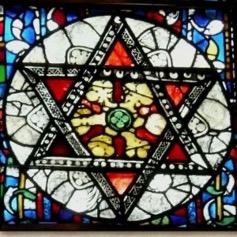
Stained glass window showing the Jewish Star of David from Lincoln Cathedral, the building of which was part-financed by 12th century British Jew Aaron of Lincoln. Source: JTrails – the National Anglo-Jewish heritage trail, which explores British-Jewish places and points of interest.
Beyond London
By the 12th century, Jews had established communities all over England. The small community had grown to around 5,000 people, in towns like Lincoln, York, Worcester, and Oxford.
TO FIND OUT
Who was Licoricia and what did she do?
CRITICAL THINKING
1. From 1066, Jews remained living only in London until the year 1135 (69 years). Why do you think this was?
2. How do you feel about people being restricted in what they can own and what they can do because of their faith or ethnic group?
CHECK YOUR KNOWLEDGE
1. What happened in 1066?
2. Why did many Jews in England work in moneylending and pawnbroking then?
3. The first Jews in England all lived in which city?