
Tzit-tzit and Tallit
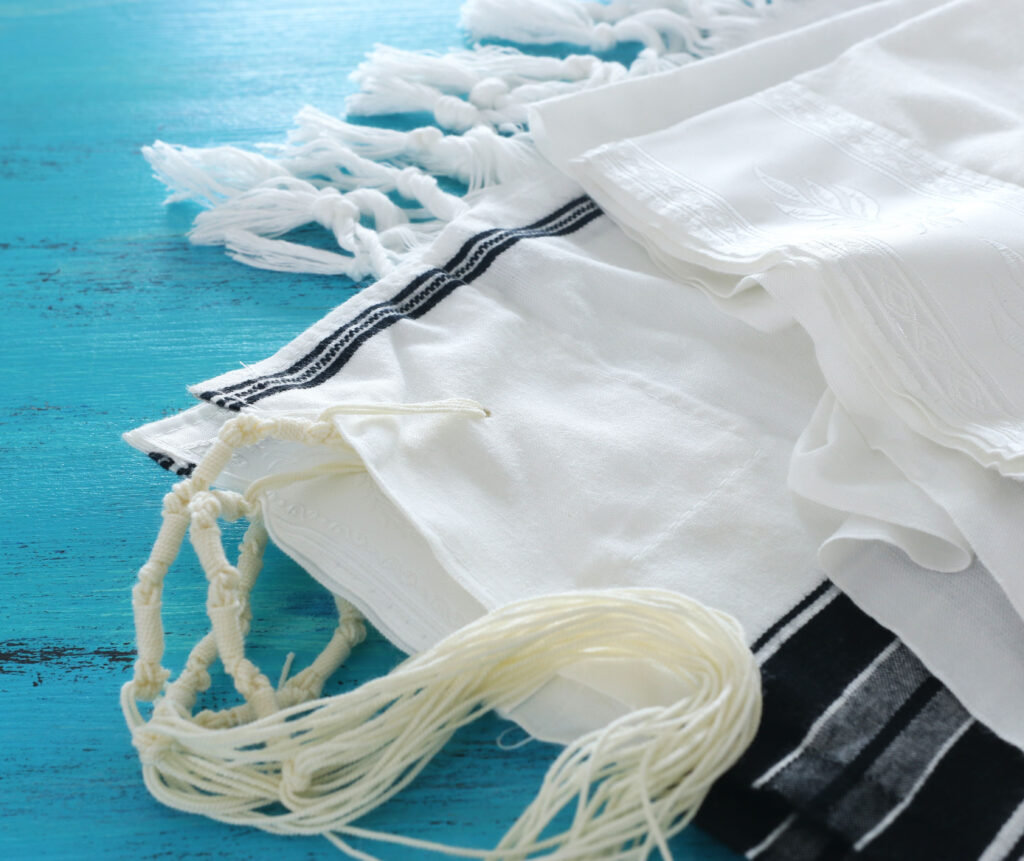
There are some items of clothing which Jewish people sometimes wear that may look strange to you.
One is a prayer shawl, which in HebrewThe language of the Jewish people and of Israel. Hebrew is also used more generally to mean the culture of the Jewish people (ie. Hebrew calendar). is called a tallit (SephardiDescribes Jews of Spanish or Portuguese decent. and Mizraḥi pronunciation) or tallis (Ashkenazi
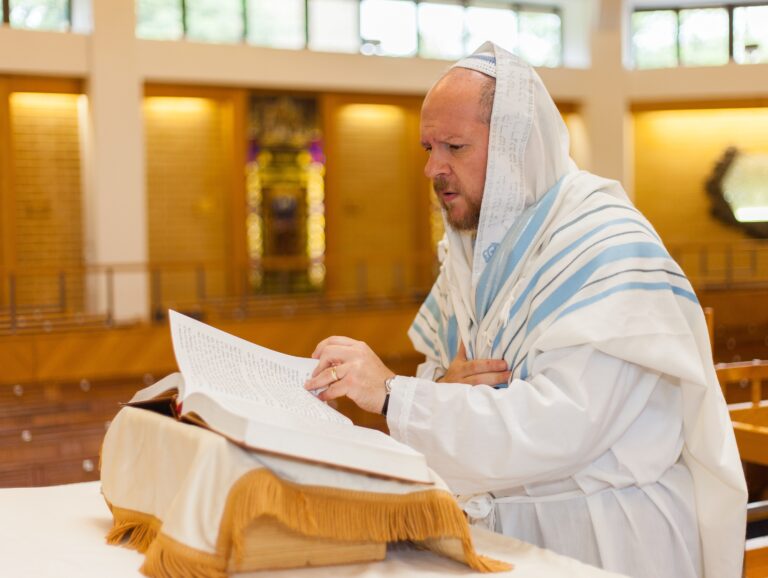
Jewish group and culture primarily developed around Central or Eastern Europe. pronunciation). These have strings which are knotted in a certain way to make tassels on the four corners. Prayer shawls are made from wool, cotton or sometimes silk. They are traditionally worn by men and boys, but in some communities women also wear them. It is worn wrapped around the shoulders, and sometimes over the head.
A tallit is worn for morning prayer on weekdays, special occasions like weddings, and for prayer services on ShabbatThe Jewish sabbath day (Friday evening to Saturday evening). Sometimes pronounced ‘Shabbos’ by Ashkenazi Jews. and holy days, especially by the person leading services and reading from the Torah. In most Ashkenazi communities, people begin wearing a tallit when they get married, whereas in most Sephardi communities, the tallit is worn from Bar/Bat Mitzvah age.

You will find the same knotted strings on a vest, which some people wear underneath their clothes every day, known as tzit-tzit (fringes). Some people call this a tallit katan (small tallit).
The tzit-tzit are worn from age three, as this is the age children are encouraged to learn about and start keeping the mitzvotPlural of mitzvah.
The origin of both these items of clothing is found in the Torah:
…they must make for themselves tzit-tzit (fringes) on the corners of the clothes for all generations… and they will see them and they will remember all of the commandments of God… (Numbers 15:37)
וְהָיָ֣ה לָכֶם֮ לְצִיצִת֒ וּרְאִיתֶ֣ם אֹת֗וֹ וּזְכַרְתֶּם֙ אֶת־כׇּל־מִצְוֺ֣ת יְהֹוָ֔ה וַעֲשִׂיתֶ֖ם אֹתָ֑ם וְלֹֽא־תָת֜וּרוּ אַחֲרֵ֤י לְבַבְכֶם֙ וְאַחֲרֵ֣י עֵֽינֵיכֶ֔ם אֲשֶׁר־אַתֶּ֥ם זֹנִ֖ים אַחֲרֵיהֶֽם
The Oral lawJewish tradition and law passed down orally from generation to generation. (Eventually written down as the ‘Mishna’.) explains exactly how the fringes should be made – with a particular number of strings and knots. This number represents 613 – the number of mitzvot (commandments/laws) in the Torah. The idea is that the person wearing the tallit or tzit-tzit will be reminded of the 613 mitzvot in the Torah – how they should be living their life.
The fringes shall be for you, so that you may see it and remember all the commandments of the Lord, and do them... (Numbers 15:39)
וַיֹּצִ֨יאוּ אֹת֜וֹ כׇּל־הָעֵדָ֗ה אֶל־מִחוּץ֙ לַֽמַּחֲנֶ֔ה וַיִּרְגְּמ֥וּ אֹת֛וֹ בָּאֲבָנִ֖ים וַיָּמֹ֑ת כַּאֲשֶׁ֛ר צִוָּ֥ה יְהֹוָ֖ה אֶת־מֹשֶֽׁה
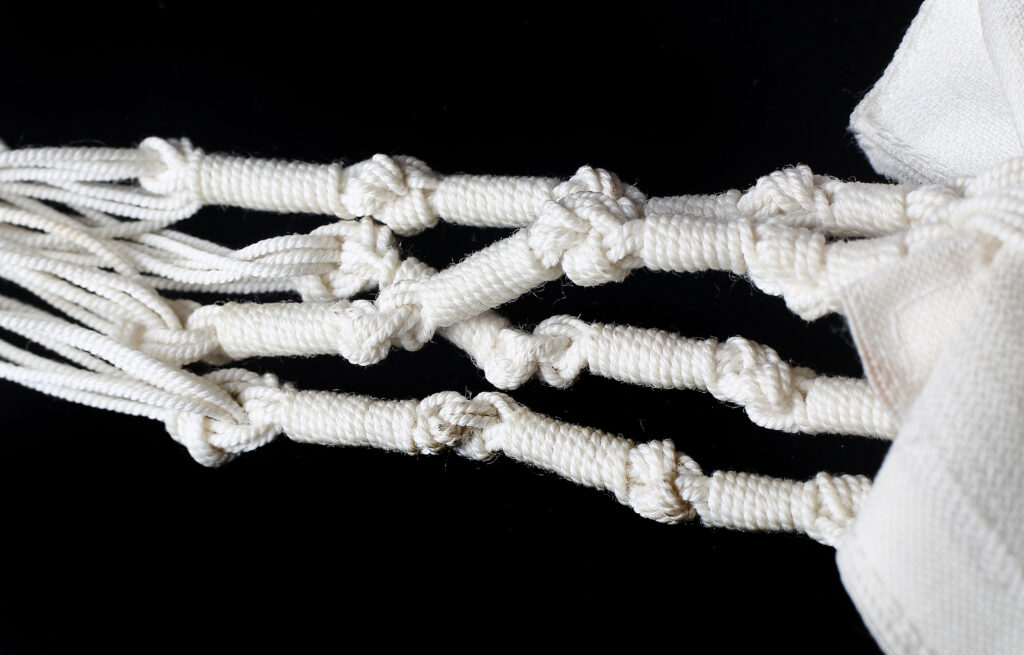
The fringes shall be for you, so that you may see it and remember all the commandments of the Lord, and do them… (Numbers 15:39)
Traditionally the strings were made with a natural blue dye called teḥelet, but this dye is hard to source nowadays, so they are usually plain white.
TO FIND OUT
1. In which groups of Judaism do women and girls wear a tallit? Why?
2. What natural source did the traditional blue ‘teḥelet’ dye come from?
CRITICAL THINKING
1. Why do you think some people put their tallit over their head to pray?
2. Do you think the type of clothes you wear have an impact on the way you behave?
DID YOU KNOW?
1. At Jewish wedding ceremonies, a tallit is often used as a ḥuppah (wedding canopy) either held up high by four people or attached to four poles. Similarly, a tallit is traditionally spread out as a canopy over the children when they are given a blessing on the festival of Simḥat TorahA festival in Autumn, celebrating completing reading the whole Torah, and starting again at the beginning. and in any procession with TorahThe Jewish holy book (bible). scrolls, such as when parading a newly completed scroll through the streets.
2. The reason the kippa/yarmulka (skullcap) is not mentioned in this page about religious clothing is because it is a tradition, not a mitzvahJewish law or commandment. It can also be used to mean a good deed. (law). Covering the head as a sign of respect to God is an ancient custom shared by many cultural groups. Some Jews wear a skullcap as a sign of identity, rather than for religious reasons.
CHECK YOUR KNOWLEDGE
1. Who might wear a tallit and when?
2. What does the word ‘tzit-tzitThe fringes on 4 cornered clothing (ie. on a talit or ‘vest’ worn under clothing).‘ mean?
3. Why are the strings on these garments knotted in a very particular way?

